
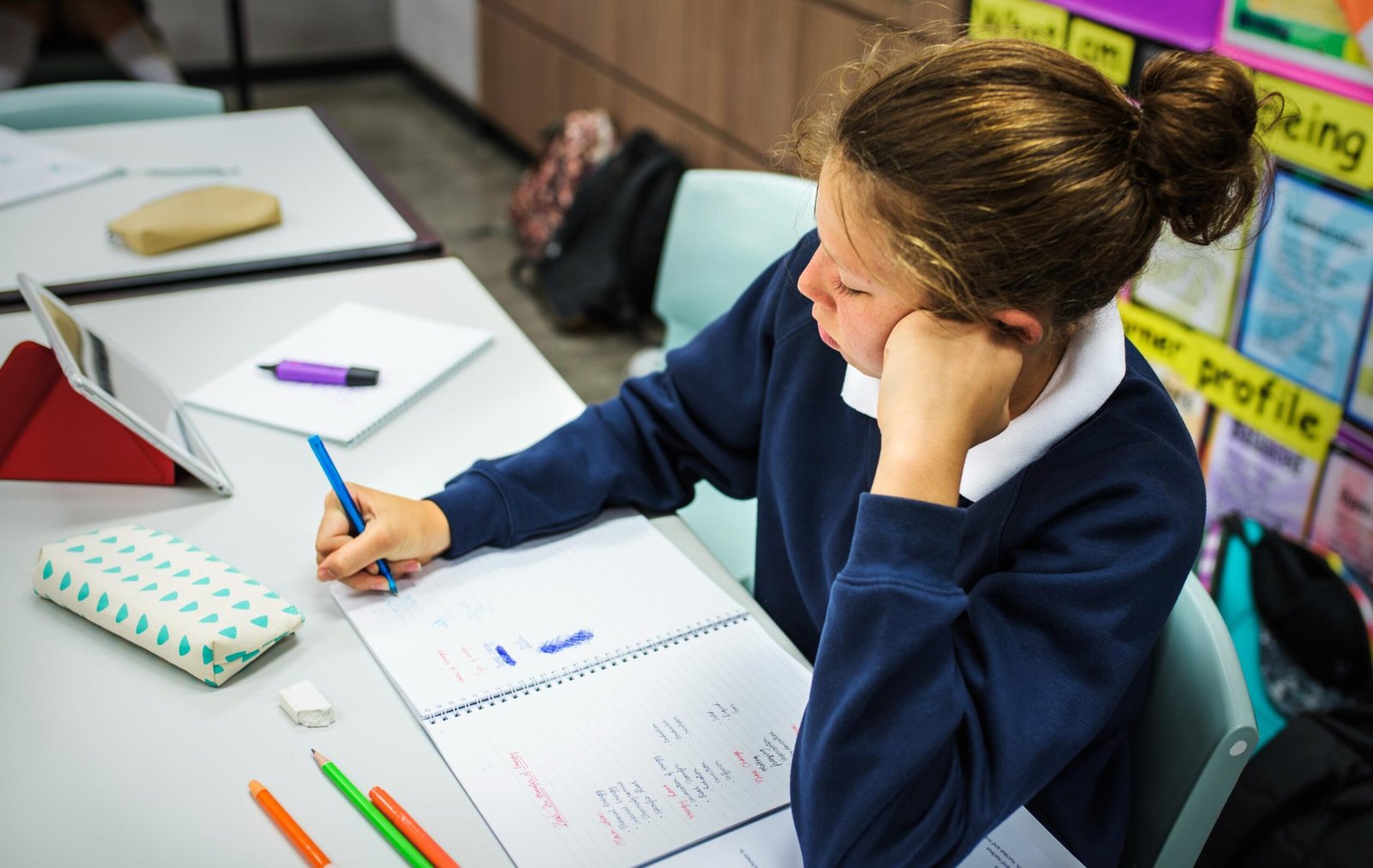
Half-term already?
For GCSE students, the first half of the autumn term can disappear incredibly quickly. Between settling back into school, homework, assessments and extracurricular activities, revision can easily fall to the bottom of the list.
But half-term provides a useful opportunity to stop, take stock and tackle any areas that haven’t quite clicked so far — without turning the entire week into a revision boot camp.
Whether your child is in Year 10 or Year 11, a small amount of focused revision over half-term can make returning to school feel much more manageable.
Half-Term Isn’t About Revising Everything
One of the biggest mistakes students make when they decide they need to “revise” is starting without knowing exactly what they’re trying to achieve.
They might spend hours rewriting notes, highlighting textbooks or jumping randomly between topics. It can feel productive, but it isn’t always the best use of their time.
Instead, half-term revision should be targeted.
Start by identifying a small number of topics that genuinely need attention.
What has your child found difficult since September? Are there topics from last year that they still don’t fully understand? Have recent tests or homework highlighted particular weaknesses?
Choosing two or three priorities is usually far more useful than attempting to revise an entire GCSE subject in a week.
Start With the Topics They Find Hardest
It’s very tempting to revise the things we’re already good at.
They’re quicker, easier and considerably more satisfying.
Unfortunately, they’re probably not where revision time will have the biggest impact.
Encourage your child to divide topics into three simple categories:
Confident – topics they understand and can answer questions on independently.
Nearly there – topics they mostly understand but still make mistakes on.
Need help – topics they don’t understand or wouldn’t know how to approach in an exam.
Half-term is an excellent opportunity to focus on those final two categories.
Active Revision Beats Simply Reading Notes
Revision should involve retrieving and using information rather than repeatedly looking at it.
Depending on the subject, this could include answering practice questions, completing past-paper questions, using flashcards, creating information from memory and then checking it, explaining a concept aloud, or completing a short quiz before reviewing mistakes.
For Maths and Science in particular, practising questions is essential. Understanding an example when someone else completes it is very different from being able to solve a problem independently.
For subjects such as English, revision might involve planning responses, practising individual paragraphs, reviewing quotations or improving specific writing techniques rather than repeatedly writing full essays.
The important thing is that the student is doing something with the information.
Use Short, Focused Revision Sessions
Half-term should still feel like a break.
Students don’t need to spend six hours a day sitting at a desk to make useful progress. In fact, trying to do too much can make revision less effective and leave students exhausted before they even return to school.
For many students, a couple of focused sessions across the week will be far more manageable.
A simple session might look something like this:
10 minutes: Review the topic and identify what you remember.
25–30 minutes: Work through revision material or practise questions.
10–15 minutes: Mark the work and identify mistakes.
5 minutes: Write down anything that still needs clarification.
That final step is particularly important. Revision isn’t only about proving what you know — it’s about discovering what you don’t know while there’s still plenty of time to fix it.
Year 11? Use Half-Term to Get Ahead of the Pressure
For Year 11 students, the months between October and the GCSE examination period can move surprisingly quickly.
Many schools will have mock examinations during the autumn or winter, and revision demands tend to increase significantly as the year progresses.
Half-term is therefore a useful opportunity to begin establishing revision habits before the pressure increases.
That doesn’t mean students need a complete GCSE revision timetable immediately.
Instead, the aim should be to start building consistency.
Even a small amount of regular revision now can make a big difference compared with attempting to relearn two years of content shortly before the exams.
Year 10 Students Benefit Too
GCSE revision isn’t only for Year 11.
For Year 10 students, half-term can be a useful opportunity to consolidate what they’ve covered during the first few weeks of their GCSE courses.
If something hasn’t made sense, addressing it now can prevent that gap from affecting later topics.
The goal at this stage isn’t intensive exam preparation. It’s making sure the foundations are secure so that Year 11 revision eventually becomes revision — rather than learning large parts of the course for the first time.
Don’t Ignore Exam Technique
Sometimes students know considerably more than their marks suggest.
They understand the content but struggle to interpret questions, structure answers, manage their time or understand what an examiner is actually looking for.
This is particularly important at GCSE.
When reviewing assessments or practice questions, don’t just look at which answers were wrong. Ask why marks were lost.
Was the knowledge missing?
Was the question misunderstood?
Was there enough detail?
Did they run out of time?
Did they know the answer but struggle to express it?
Identifying the reason behind lost marks makes revision much more targeted.
When a Student Doesn’t Know Where to Start
Sometimes the problem isn’t motivation.
A student genuinely doesn’t know what they need to revise.
They may have several subjects to manage, hundreds of possible topics and no idea which areas should take priority. For a teenager who is already feeling overwhelmed, being told to “go and revise” isn’t particularly helpful.
This is where individual support can make a significant difference.
A tutor can help identify gaps in knowledge, prioritise topics, explain difficult concepts and introduce exam questions at an appropriate level.
Rather than simply adding another hour of work, good tutoring should make the student’s independent revision more effective too.
A Little Work Now Can Make the Next Half-Term Easier
Half-term doesn’t need to disappear beneath textbooks and past papers.
Rest matters too.
But setting aside a small amount of time to identify weaknesses, practise difficult topics and address anything that hasn’t quite clicked can give GCSE students a valuable confidence boost before returning to school.
And starting those habits now means there’s far less pressure to suddenly “start revising” later in the year.
At Alpha Tutoring Oxfordshire, we provide personalised one-to-one GCSE tuition across a range of subjects, including Maths, English and Science.
Our tutors can help students identify gaps in their knowledge, strengthen difficult topics, develop exam technique and build a realistic approach to revision.
If your child is feeling overwhelmed by GCSEs — or you’re simply not sure where they should begin — get in touch and tell us what they’re currently finding difficult. We can help you find the right support.